





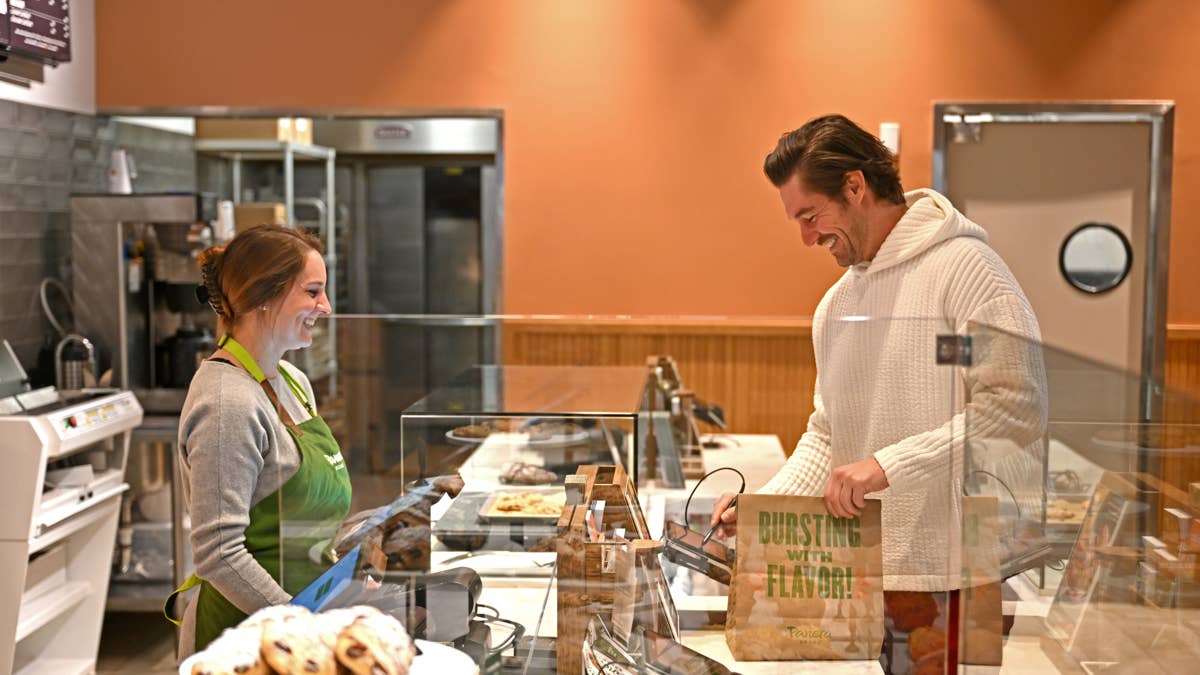
After closing more than two dozen restaurants over the past year, Panera Bread is overhauling its business with menu innovation, restaurant upgrades, and new marketing partnerships as café chains across the industry compete to attract increasingly value-conscious consumers.
The company’s latest moves reflect a broader shift taking place across the fast-casual sector. As consumers become more selective with discretionary spending and competition intensifies, brands traditionally known for salads are expanding their menus, experimenting with trend-driven offerings, and leaning into celebrity and influencer partnerships to reach a wider audience.
Panera Bread closures
Panera Bread unveiled the “Panera RISE” transformation plan in November 2025, outlining a goal of reaching $7 billion in systemwide sales by 2028. The initiative includes investments in menu innovation, higher-quality ingredients, digital capabilities, and improvements to the overall guest experience.
As part of the effort, the company has also reassessed its restaurant portfolio by opening new locations, modernizing existing cafés, and closing underperforming stores.
Since last summer, Panera Bread has closed 25 restaurants across California, Iowa, Pennsylvania, Maryland, New York, North Carolina, Ohio, and Texas, according to Fast Company.
Texas accounted for the largest share of those closures after the franchise operator EYM Café filed for Chapter 11 bankruptcy, leading to the sale of 10 Houston-area locations. Eight of those restaurants have since been acquired by an entity affiliated with Hamra Enterprises, one of Panera Bread’s largest franchisees, which operates cafés across several states, including Illinois and Massachusetts.
Despite the closures, the company continues to expand. Panera Bread has opened 23 new bakery-cafés this year, including 15 company-owned and eight franchised locations, and expects to open at least 25 more before year-end, according to Fast Company.
The chain currently operates approximately 2,240 restaurants nationwide, according to its store locator.
Panera Bread expands its menu
Alongside changes to its restaurant portfolio, Panera Bread has diversified its menu beyond its traditional lineup of salads, sandwiches, and pastries.
Recent additions include Salad Stuffers, Market Bowls, specialty beverages, and limited-time offerings designed to appeal to evolving consumer tastes and encourage repeat visits.
The company has also expanded its marketing efforts through celebrity collaborations. Its latest campaign features internet personality Jake Shane, who partnered with the chain to launch the “Pass That Panera” Meal, a custom Mix & Match Menu order that showcases several of the brand’s newest menu items.
The approach reflects a larger trend emerging across the fast-casual café industry.
Salad chains expand beyond their core menus
Pura Vida Miami has expanded beyond its signature salads and sandwiches by introducing trend-driven menu items, such as frozen yogurt, and by partnering with influencers and Miami FC to broaden its reach.
Since opening in 2012, the café chain has grown to more than 50 locations across six states, according to its store locator.
Sweetgreen (SG) has also diversified its offerings. The company introduced wraps nationwide in May 2026 and partnered with chef and food writer Alice Waters on the Peach & Goat Cheese Salad as part of its Summer 2026 campaign. Earlier, the chain tested Ripple Fries in March 2025 before discontinuing the item five months later.
Those menu additions come as Sweetgreen also works to optimize its restaurant footprint. During the company’s fourth-quarter earnings call, CFO Jamie McConnell said the chain expects to close “a handful” of restaurants in 2026 as leases expire, while continuing to evaluate additional underperforming locations.
Just Salad has followed a similar path, adding wraps in 2023 and introducing Market Plates in 2025 as it broadened its menu beyond salads. The chain now operates approximately 133 restaurants across eight states, according to its store locator.
Why café chains are moving beyond salads
Restaurant operators are adapting as higher costs and changing consumer spending habits reshape the industry.
According to the U.S. Bureau of Labor Statistics, prices for food away from home increased 3.4% in the 12 months ending June 2026, contributing to higher menu prices across the restaurant industry.
Here’s some of my previous coverage of restaurant strategy:
- Popular beverage chain closing multiple locations nationwide
- McDonald’s builds its new menu around a flavor it never sold
- Burger chain closes most locations after partner’s collapse
At the same time, analysts say consumers have become more value-conscious than in previous economic cycles. Diners are also seeking greater menu variety and better value, prompting restaurant chains to expand beyond their traditional core offerings to appeal to a broader audience.
James O’Reilly, a food industry executive with more than 15 years of restaurant marketing experience, told FSR Magazine that middle- and lower-income households continue to face financial pressure, despite broader economic improvements.
“In strong economic environments, price increases have historically been tolerated by restaurant guests. Over the past few years, that’s become far more difficult,” said O’Reilly.
“The restaurant industry is battling for its share of shrinking consumer wallets,” said The New York Times food industry writer and expert Julie Creswell. “Last year, most chains raised menu prices, and lower-income consumers were the first to cut back on eating out.”
As competition intensifies, café chains that once relied heavily on salads are broadening their menus, investing in trend-driven products, optimizing their restaurant portfolios, and increasing their marketing efforts to attract new customers.
For many brands, diversification has evolved from a growth opportunity into a competitive necessity as they adapt to shifting consumer preferences and an increasingly crowded fast-casual market.
Related: Popular breakfast chain sold, 16 locations shut down