
Fragile Systems and Frayed Nerves: The Real Danger Behind America’s Tech Meltdown

Americans are currently grappling with a dizzying sequence of technical collapses that feel less like random glitches and more like a systemic warning. From Microsoft Outlook crashes and Chase Bank bugs to a nationwide grounding of flights by the FAA and failures within the NSA’s own classified networks, the sheer volume of disruptions has left many wondering if something more sinister is at play. While there is currently no concrete evidence of a coordinated attack by a foreign power, the timing has fueled widespread anxiety across a population already strained by economic instability and geopolitical tension.
The response from the Trump administration has done little to soothe those fears. With President Trump dismissing the outages as mere quirks of being big and powerful, and other officials attempting to shift blame onto legacy infrastructure inherited from previous administrations, there is a growing sense that the current leadership is disconnected from public alarm. Secretary of State Marco Rubio acknowledged the pervasive uncertainty, yet the overall messaging remains clumsy, characterized more by deflection than by a coherent strategy for national resilience.
Beyond the immediate frustration of canceled flights or missing emails lies a deeper, more unsettling reality regarding American vulnerability. Experts suggest that these failures highlight a precarious transition into an era dominated by artificial intelligence and hyper-speed computing, pushing against an aging infrastructure that was already crumbling. The danger may not be a single malicious actor today, but rather the realization that our essential systems are so fragile that simple updates can trigger catastrophic cascades.
This volatility serves as an open invitation to adversaries in Russia and China, demonstrating exactly how easily internal discord and structural weakness can be exploited. As AI continues to evolve faster than the government’s ability to regulate or manage it, the risk shifts from accidental errors to intentional sabotage. Without a serious commitment to cybersecurity and comprehensive emergency planning for polycrises, these recent malfunctions may look like minor inconveniences compared to what happens when a truly hostile force decides to test these breaking points.
Related Stories

Sanders Plans Phased Rollout of Universal Healthcare Under New Senate Leadership
Senator Bernie Sanders is preparing to leverage his upcoming role as chairman of the Senate Health, Education, Labor…

Hinojosa Signals Policy Shift With Plan to Undo Key Abbott Orders
Governor elect Gina Hinojosa is preparing to pivot Texas away from several high profile policies enacted by her…

Breaking the Heartland Mold: JD Ford’s Path to Victory in Indiana
When Representative Victoria Spartz launched a series of attack ads featuring a photo of JD Ford wearing a…
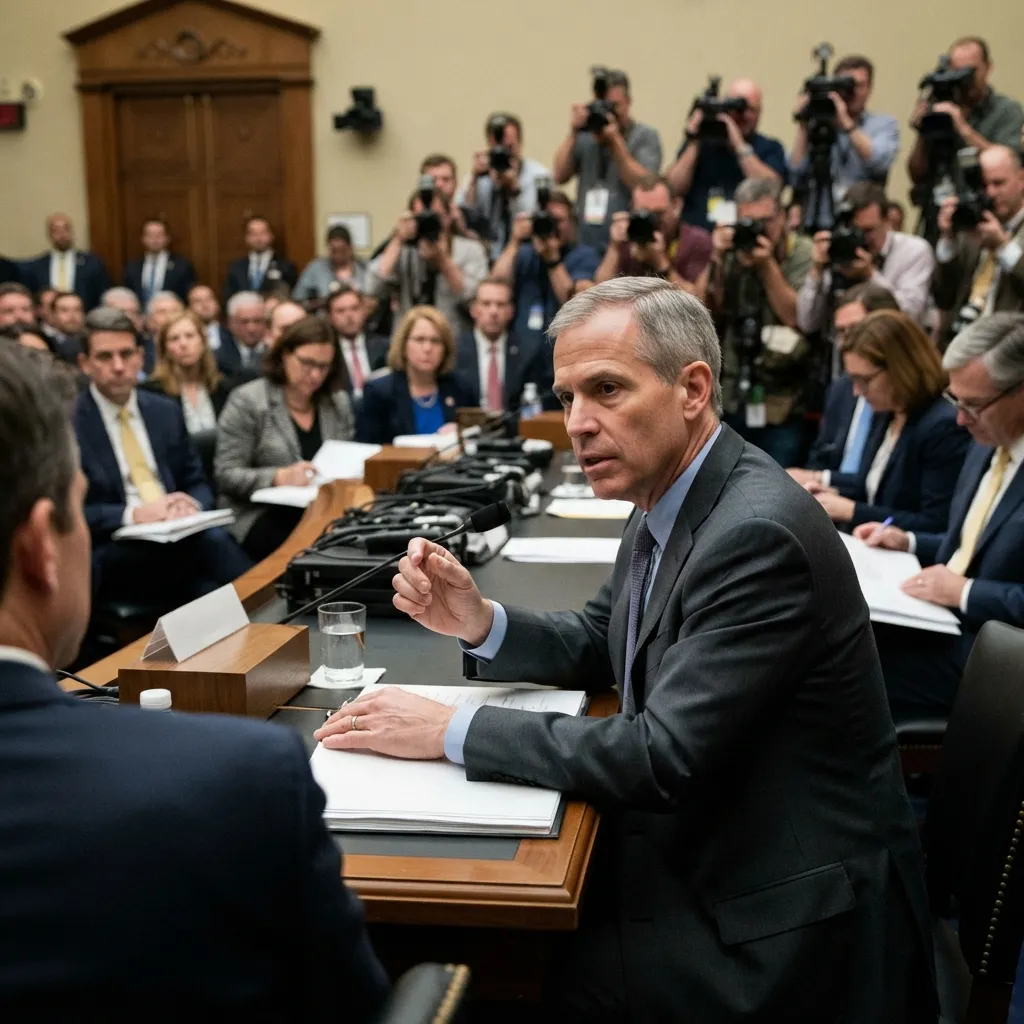
Intelligence Chief Attributes Wave of Government Tech Failures to Routine Maintenance
Director of National Intelligence Jay Clayton faced tough questioning before the House Homeland Security Committee on Wednesday as…