





The Eurosystem launched Pontes on Monday, a solution that lets financial institutions settle wholesale transactions in tokenized assets using central bank money.
The launch is the first initiative under the Eurosystem’s strategic programme to make central bank money fit for a tokenized future, handing banks and market infrastructures a risk-free settlement asset. It lands as private issuers push their own euro tokens, a MiCA-compliant supply that climbed 128% to $673.9 million by late June yet still trails the dollar-pegged sector.
ECB Targets the Cash Leg of Tokenized Trades
Tokenization turns an asset into a digital token recorded on a shared ledger, the distributed ledger technology (DLT) that underpins blockchains. The European Central Bank (ECB) says handling assets this way can speed up wholesale trades and lower their cost, because a single network can carry an asset through its full life, from issuance and trading to settlement, custody and servicing, while smart contracts run those steps automatically.
The piece those markets have lacked is a way to pay for a trade in money that carries no counterparty risk, and Pontes supplies it by moving the cash side across the Eurosystem’s own books. Pontes builds on tests the Eurosystem ran in 2024, during which public and private stakeholders told the ECB that access to a risk-free settlement asset was crucial for wider adoption. European banks are chasing the same cash leg through private means, with the Qivalis consortium reaching 37 banks across 15 countries as it works toward a MiCA-compliant euro stablecoin.
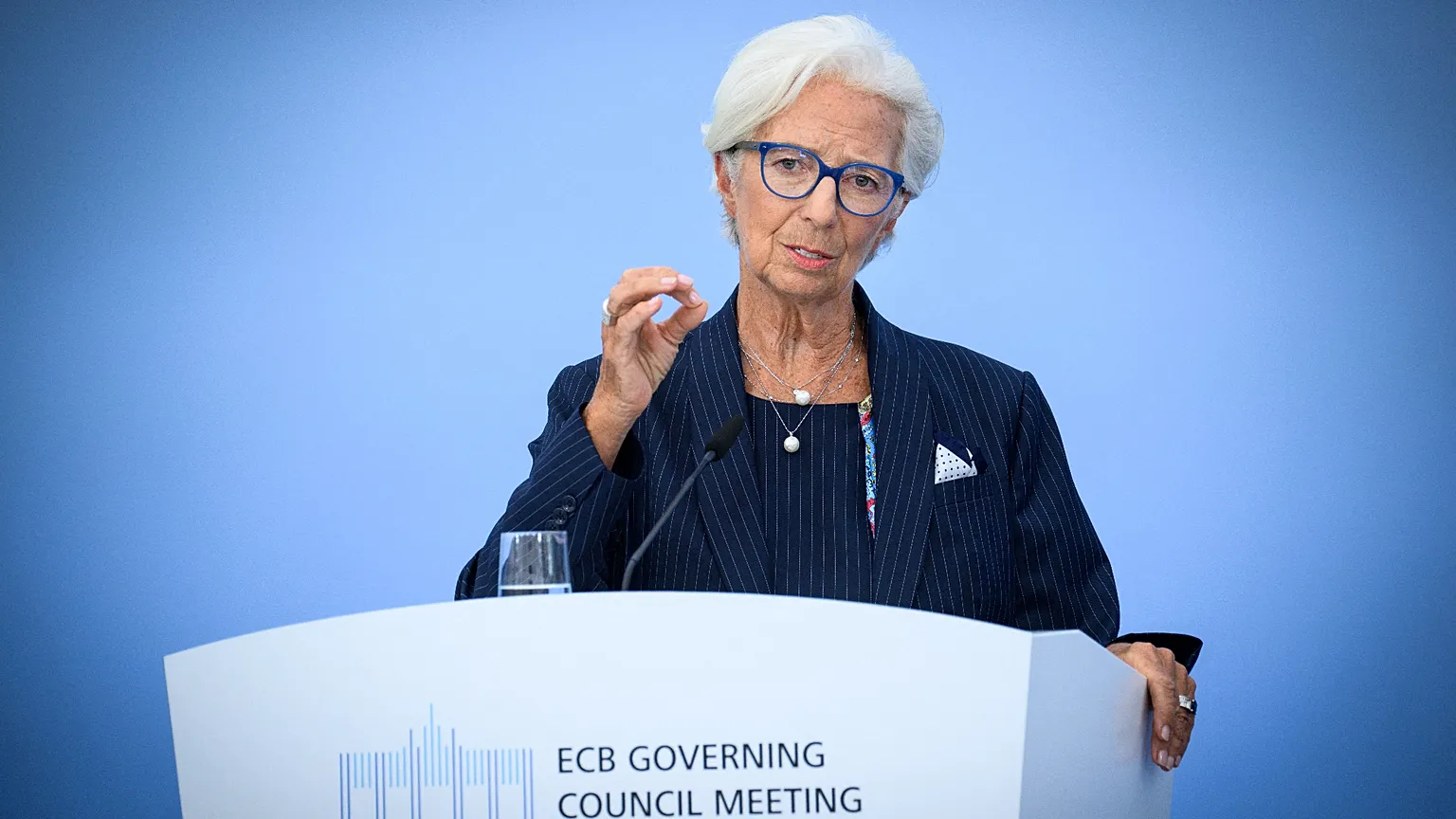
Piero Cipollone, a member of the ECB’s Executive Board, said Pontes brings the stability and trust of central bank money to Europe’s tokenized finance ecosystem. Christine Lagarde, president of the ECB, said that:
“The Eurosystem is working to enable a more integrated, innovative and resilient European financial market in the digital age,” adding that “We will continue to make progress in close collaboration with the market.”
Investor Takeaway
Pontes could make tokenized asset markets easier for financial institutions to use by providing central bank money for settlement, addressing a key infrastructure gap.
Banks and DLT Operators Join Pontes
Pontes starts with a core set of services and will expand in line with market needs and technological developments, adding enhanced features and longer operating hours over time, with full implementation expected by 2028. That staged rollout keeps public money at the center of settlement at a moment when the ECB has resisted proposals to loosen liquidity rules for euro stablecoin issuers, warning that easier terms could pull deposits out of European banks.
An initial group of market participants and DLT operators has completed onboarding and can use Pontes immediately, and more have committed to connecting in the coming months. The first cohort spans major European lenders and public banks, including Deutsche Bank, Santander, Société Générale and the European Investment Bank, alongside DLT operators such as Clearstream and Cashlink, with the Deutsche Bundesbank onboarding as a market participant.
Some of those participants are building private rails in parallel, with Société Générale joining Boerse Stuttgart and flatexDEGIRO on an EU blockchain settlement network that moves its cash leg on SG-FORGE tokens. Work on the wider public ecosystem continues under Appia, which brings together the Eurosystem, Danmarks Nationalbank and public and private stakeholders in experimentation and analytical work, with the goal of delivering a blueprint for DLT-based financial services by 2028.
Investor Takeaway
The participation of major banks and DLT operators gives Pontes an early network of institutions that could help drive adoption as the Eurosystem expands the system through 2028.